Cryptocurrency Trends and Their Impact on VIP Tier Eligibility in International Mobile Sportsbook Platforms
Written by Mara Simmons · Aug 8, 2026

Cryptocurrency Trends and Their Impact on VIP Tier Eligibility in International Mobile Sportsbook Platforms
Cryptocurrency adoption continues to reshape transaction patterns across international mobile sportsbook platforms, where digital assets now facilitate deposits and withdrawals that directly influence VIP tier qualification thresholds. Platforms operating in multiple jurisdictions have integrated wallets supporting Bitcoin, Ethereum, and various stablecoins, which allow users to complete transfers with reduced processing times compared to traditional banking rails. Data from industry reports indicates that transaction volumes in crypto rose notably through mid-2026, driven by users seeking faster access to betting markets and loyalty rewards.
Adoption Patterns Across Global Markets
Operators in Europe, Asia-Pacific, and Latin America have adjusted their payment infrastructures to accommodate blockchain-based options, since regulatory frameworks in several regions now permit licensed platforms to accept digital currencies under strict compliance rules. As of August 2026, platforms report that crypto deposits account for an increasing share of total inflows, particularly among users who maintain high-frequency activity. Researchers at academic institutions studying digital finance note that these shifts stem from lower fees and near-instant settlement, which enable participants to meet the deposit and wager volume requirements for tier advancement more rapidly than with card or wire methods.
Stablecoin usage has grown because it mitigates price volatility that once deterred some bettors from larger commitments. Platforms track these inflows through integrated ledger systems that automatically log qualifying activity toward VIP milestones, and this automation reduces manual verification steps while maintaining audit trails required by licensing authorities.
Transaction Efficiency and Tier Qualification Mechanics
VIP eligibility on most international mobile sportsbooks depends on cumulative deposit amounts, wager turnover, and account tenure, with crypto payments accelerating the accumulation of these metrics. Users who route funds through supported networks often clear bronze, silver, or gold thresholds within shorter timeframes because settlement occurs in minutes rather than days. Observers tracking platform analytics have documented cases where average time to first VIP upgrade dropped when crypto became a primary option, since the friction of currency conversion and bank delays diminished.
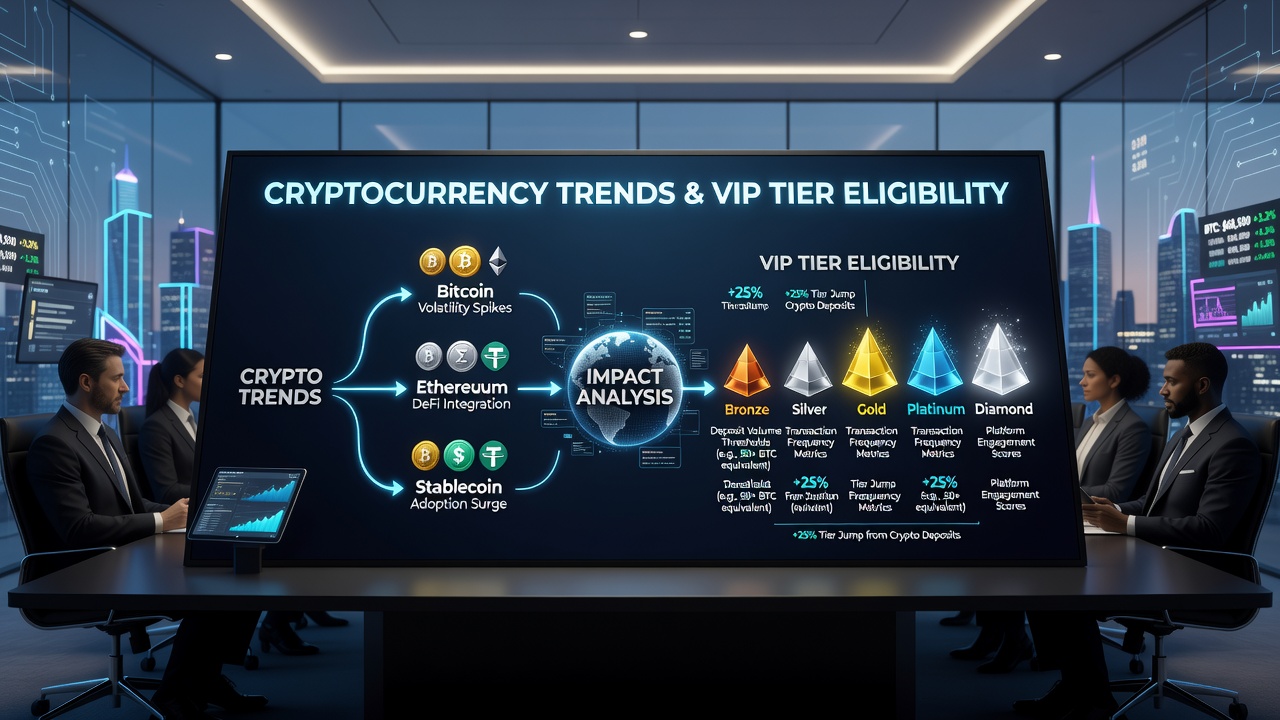
Yet the same speed introduces new considerations for compliance teams, who must verify source of funds across decentralized networks. Several operators now employ third-party analytics tools that flag unusual wallet patterns while still crediting qualifying volume toward tier status. According to figures released by the European Gaming and Betting Association, platforms that expanded crypto support recorded measurable upticks in high-value user retention during the first half of 2026.
Regional Regulatory Influences on Crypto VIP Structures
Licensing conditions vary widely, and these differences affect how crypto activity translates into VIP benefits. In jurisdictions with mature igaming rules, operators must maintain segregation of player funds and transparent reporting, which extends to digital asset transactions. Australian regulatory bodies, for instance, require detailed reconciliation of crypto deposits before they count toward loyalty programs, whereas certain Asian markets permit more flexible integration provided tax obligations are met. This patchwork means users encounter different qualification formulas depending on the platform's primary license, and those who switch between operators sometimes find their accumulated crypto volume resets or receives partial recognition.
Industry organizations such as the International Association of Gaming Regulators have published guidance encouraging standardized reporting formats for blockchain transactions. Platforms that adopt these formats report smoother audits and fewer delays in granting VIP privileges, since regulators can trace flows more efficiently through public ledgers.
Future Trajectory and Platform Adaptations
Emerging Layer-2 solutions and cross-chain bridges are expected to further compress transaction times, potentially allowing even smaller but more frequent deposits to contribute toward tier thresholds. Several major sportsbook operators have already begun testing smart-contract-based loyalty modules that automatically issue tier upgrades upon verified on-chain milestones. Research papers from university finance departments examining these mechanisms suggest that transparency features inherent in blockchain reduce disputes over qualifying activity, which benefits both operators and users.
Security protocols continue to evolve alongside adoption, with multi-signature wallets and hardware authentication becoming standard for accounts approaching higher VIP levels. These measures address risks associated with larger crypto holdings while preserving the speed advantage that originally attracted users to digital payments.
Conclusion
Cryptocurrency trends have established measurable connections with VIP tier eligibility processes on international mobile sportsbook platforms through faster settlement, broader acceptance of stablecoins, and automated tracking via distributed ledgers. Regional regulatory variations continue to shape implementation details, yet the overall pattern shows increased integration of digital assets into loyalty structures. As transaction technologies advance, platforms and users alike navigate evolving qualification pathways that reflect both technological capability and compliance requirements across jurisdictions.