Tennessee Enacts Swift Prohibition on Sweepstakes Casinos With Immediate Effect
Written by Mara Simmons · May 27, 2026

Tennessee Enacts Swift Prohibition on Sweepstakes Casinos With Immediate Effect
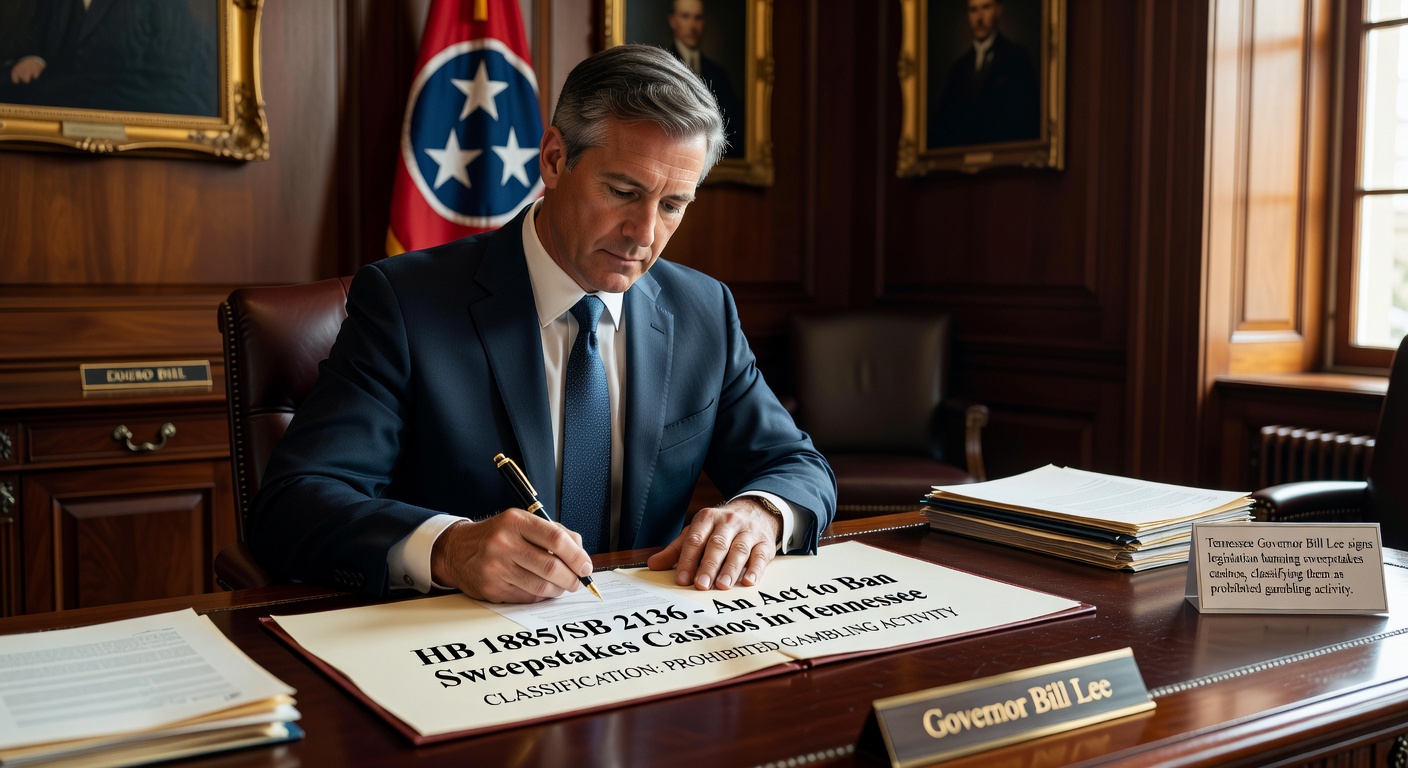
Governor Bill Lee signed HB 1885/SB 2136 into law and the measure reclassified sweepstakes casino platforms as unlawful gambling under existing consumer protection statutes; the prohibition activated the moment the governor's signature was affixed and forced multiple operators to withdraw services from Tennessee residents without delay.
Multiple platforms responded by shutting down access for state users and several companies issued public notices confirming their exit from the market; this rapid compliance followed a series of earlier regulatory steps that included formal cease-and-desist correspondence from the state Attorney General's office.
Details of the Legislation and Its Scope
The bill amends Tennessee's consumer protection framework to place sweepstakes-style casino offerings under the definition of prohibited gambling activities; operators who had offered slot-style games, table games and other interactive experiences through a sweepstakes entry model now face clear legal barriers that prevent continued service within state borders.
Legislative text for HB 1885/SB 2136 specifies that any arrangement allowing users to obtain prizes through chance-based mechanisms tied to purchases or participation is now treated as unlawful; the language leaves little room for reinterpretation and applies across digital channels that reach Tennessee IP addresses.
Immediate Operational Consequences for Platforms
Operators began disabling accounts and blocking transactions for Tennessee-based players within hours of the signing announcement; several well-known sweepstakes casino brands posted messages directing users to close their accounts and withdraw remaining balances before access was fully terminated.
Payment processors working with these platforms also adjusted their policies to exclude Tennessee transactions, which accelerated the wind-down process and limited options for remaining users who sought to cash out balances; the coordinated exits reduced the number of active sweepstakes sites available to state residents to near zero in a matter of days.
Prior Enforcement Steps Leading to the Ban
Before the legislation reached the governor's desk the Attorney General had already dispatched cease-and-desist letters to several operators warning that their current business practices violated existing statutes; those communications outlined specific violations related to prize structures and consumer solicitation methods that the state viewed as impermissible.
Recipients of the letters faced the choice of halting operations or contesting the state's position through legal channels, yet most chose to pause marketing and gameplay for Tennessee users while the bill moved through the legislative process; this sequence of warnings established a clear regulatory trajectory that culminated in the signed prohibition.
Broader Market Adjustments Observed
Other states have monitored Tennessee's approach and some regulatory bodies have begun reviewing similar sweepstakes models within their own jurisdictions; the speed of the Tennessee implementation provided a practical example of how quickly operators can be required to alter service territories when new statutory language takes effect.
Industry participants noted that marketing campaigns aimed at Tennessee audiences were discontinued and that customer support teams received increased volumes of inquiries regarding account closures and fund withdrawals; these logistical challenges underscored the operational complexity of complying with an immediate ban rather than a phased transition period.
Conclusion
The signing of HB 1885/SB 2136 closed the door on sweepstakes casino operations in Tennessee and required swift action from every affected platform; earlier enforcement communications from the Attorney General had already signaled the direction of policy and the new statute converted those signals into binding statewide requirements that remain in force.