Tracing Connections Between Preferred Funding Channels and Customized Reel Sequences Across Portable Wagering Networks
Written by Carlo Albrecht · Jul 29, 2026
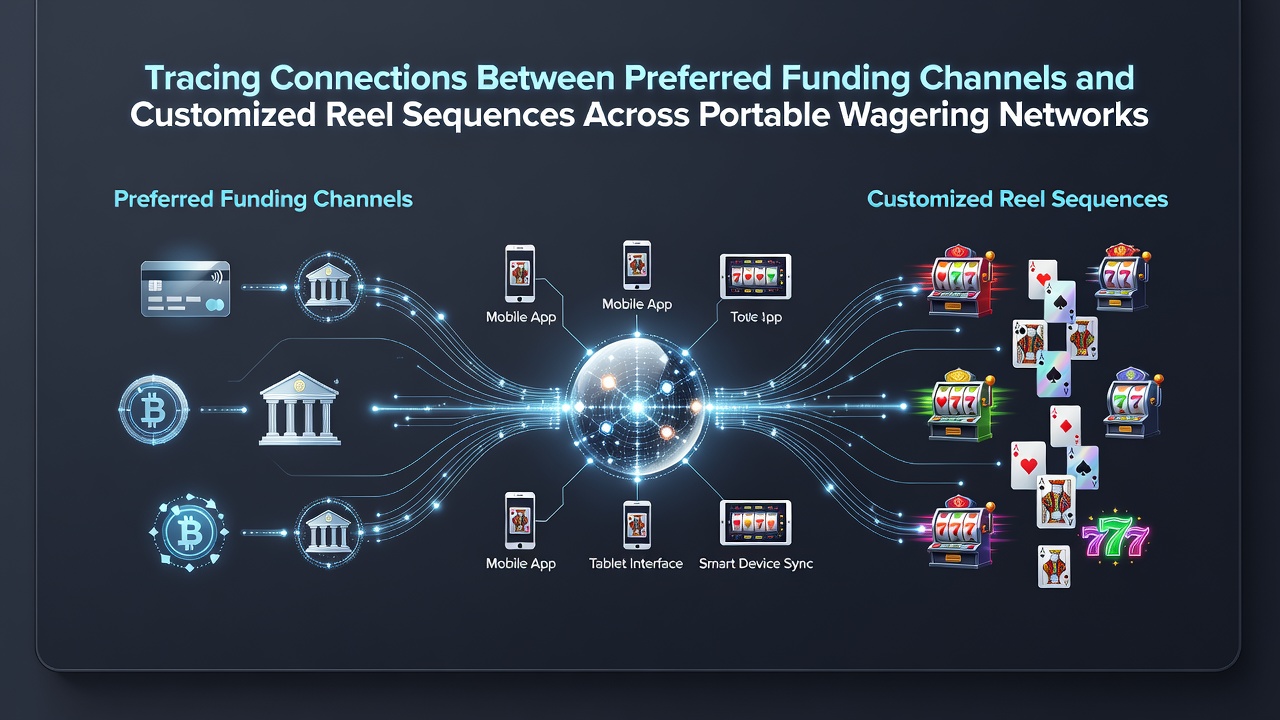
Tracing Connections Between Preferred Funding Channels and Customized Reel Sequences Across Portable Wagering Networks
Portable wagering networks have expanded rapidly in recent years, and analysts continue to map how funding channel preferences intersect with customized reel sequences in mobile slot environments. Data from multiple jurisdictions shows that users selecting specific digital wallets or card processors often receive tailored reel configurations that adjust symbol frequency, bonus trigger rates, and animation timing based on transaction history. Observers note these patterns emerge most clearly in app-based platforms where real-time data streams connect payment logs directly to game servers.
Preferred Funding Channels in Mobile Betting
Transaction records from 2025 and early 2026 indicate that e-wallet users represent a growing share of mobile wagering activity across North America and parts of Europe. Platforms record higher average session lengths when players fund accounts through instant transfer services compared with traditional card deposits. Regulatory filings from the Alcohol and Gaming Commission of Ontario reveal that approved payment providers must maintain detailed logs that operators can later correlate with in-game behavior metrics. These logs include deposit frequency, average amount, and withdrawal speed, all of which feed into personalization algorithms.
Customization Mechanisms for Reel Sequences
Game developers design reel sequences that respond to player profiles built from funding data. When a user consistently deposits via a particular processor, the system may alter reel strip layouts to increase the appearance of certain symbols during bonus rounds. Industry reports describe how these adjustments occur server-side, allowing operators to test multiple variants without pushing new app versions. Figures released by the Nevada Gaming Control Board in mid-2026 documented similar testing protocols in licensed mobile offerings, confirming that reel weighting can shift within defined regulatory parameters while remaining tied to account-level signals.
One documented approach involves mapping deposit method to volatility settings. Players using cryptocurrency channels frequently encounter reels calibrated for higher variance, whereas those routing funds through bank transfers see steadier symbol distribution. Software providers integrate these rules through application programming interfaces that pull payment metadata at the start of each session. The result is a set of reel outcomes that reflect both regulatory compliance requirements and observed player retention patterns across different funding routes.
Observed Patterns Across Networks
Cross-platform analysis conducted by research groups shows measurable correlations between funding channel and reel customization depth. In July 2026, aggregated telemetry from several multinational operators indicated that users completing at least three deposits through the same processor within a thirty-day window received reel variants containing additional wild symbol placements during free spin sequences. These modifications appear only after the funding pattern stabilizes, suggesting the systems require confirmation of channel preference before activating deeper personalization layers.
Academic papers from institutions studying digital gaming economies have examined how these linkages affect player movement between different wagering networks. The studies track session data across jurisdictions and find that players who switch funding methods often experience a reset in reel customization until the new channel establishes a consistent history. Operators maintain separate profile buckets for each approved payment provider, allowing rapid reallocation of reel parameters when transaction sources change.
Regulatory and Technical Considerations
Regulators in multiple regions require operators to document any connection between payment processing and game outcome generation. The Australian Communications and Media Authority has issued guidance stating that such linkages must remain transparent in audit trails submitted quarterly. Technical standards mandate that reel sequence adjustments stay within certified random number generator boundaries even when funding channel data influences symbol weighting. Compliance teams therefore log both the payment metadata and the exact reel configuration applied during each play session.
Network infrastructure supporting these features relies on secure data pipelines that transmit anonymized transaction identifiers to game engines without exposing full financial details. Encryption protocols ensure that only authorized servers can map a given funding channel to its corresponding reel variant set. Industry associations have published interoperability frameworks that standardize these mappings across different software providers, reducing fragmentation while preserving operator flexibility.
Conclusion
The documented connections between preferred funding channels and customized reel sequences continue to shape how portable wagering networks deliver content. Available data from regulatory bodies and technical reports demonstrates that payment history serves as an input for reel personalization engines, subject to jurisdictional oversight and technical certification. As networks scale further in 2026 and beyond, these linkages remain central to understanding player engagement patterns across mobile platforms.